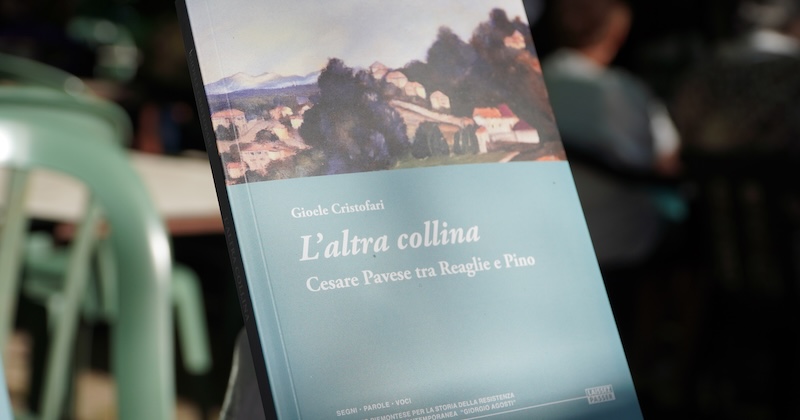
For our themed column on Pavese’s contemporary critique, Iuri Moscardi interviewed Gioele Cristofari about his essay L’altra collina.
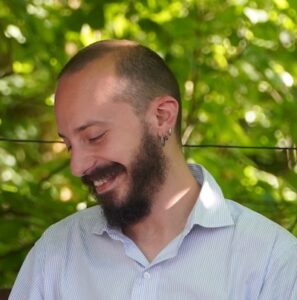 Gioele Cristofari is a research fellow in Contemporary Italian Literature at the Università degli Studi dell’Insubria. His academic, from bachelor to doctorate degree, was all focused on Cesare Pavese. From his master’s thesis he derived his first monograph, Il canzoniere smembrato. Le Poesie del disamore di Cesare Pavese (Edizioni dell’Orso, 2021), followed in 2025 by two further volumes, complementary in their own way: Cesare Pavese politico (Quodlibet) and L’altra collina (Seb27). With Monica Arena, Valter Boggione, Luciano Curreri, Darwin Pastorin, and Pierluigi Vaccaneo, he discussed L’altra collina during an off-event of the 2026 Pavese Festival.
The critical edition of Pavese’s “poesie del disamore” and the essay on the political aspects of Pavese deal with topics that scholars usually keep separate: how and when did your interest in Pavese begin?
When I first approached literary studies, it seemed to me that the best editions of Pavese’s work, published in the 1990s or shortly afterwards, had in fact attracted relatively little critical follow-up from the perspective of textual variants despite the rich critical apparatus they included. I almost glimpsed a methodological indication from the Einaudi volume Poesie (1998), which from its very Nota laid the groundwork for a future critical edition. And so, with a great deal of goodwill and very little pragmatism, I began working on Pavese’s poetry, attempting to apply the method of authorial philology and Contini’s so-called “critica degli scartafacci” [which focused on the different phases of an author’s work, as witnessed by his drafts, editor’s note].
The two theses (bachelor and master) that I defended at the University of Turin followed this approach, taking as their starting point specific sections of Pavese’s work: the first (supervised by Donato Pirovano) was dedicated to Verrà la morte e avrà i tuoi occhi and the second (supervised by Valter Boggione) focused on Poesie del disamore. I admit that with these texts I had an easier task: these were collections of love poetry, compact and homogeneous even in terms of their compositional chronology, and in my analysis, I could limit myself to an internal reading of the text. When for my doctorate I turned to Pavese’s major work, Lavorare stanca, things changed considerably: two very different editions published during the author’s lifetime, for an anti-lyrical collection from which the individual song had been banished in favor of a working-class, peasant, even lumpen epic, murmured (the word is Pavese’s own) in long, strongly cadenced, and highly original verses.
Working on that collection – the only true “book of poetry” that Pavese produced – I came to understand the necessity of reading his texts in the context of the Fascist regime. The first occasion for this purpose was a 2023 article dedicated to the poem Una generazione, on which I worked thanks to the interest of Professor Elena Valentina Maiolini (to whom I am grateful, for this and many other reasons); those few pages constituted the first seed of Pavese politico, in which I sought to interpret his work no longer solely as the sorrowful song of the writer who died by suicide for love, but above all as that of an intellectual who, through his writing, attempted to intervene in his own time. Starting from the earliest posthumous reception (entirely internal to Einaudi and the Italian Communist Party, often overlapping), I tried to understand why the author of novels such as The House on the Hill or The Comrade was catalogued as apolitical par excellence. That said, it may well be true that the lyrical Pavese and the epic Pavese diverge to the point of opposing each other, and it is not my intention to force them into an artificial unity. Yet, a political reading of the apparently apolitical portions of his work would be very interesting: I am thinking of an analysis of the love canzonieri in terms of the (anti-)feminine element that pervades them, and of a feminist critique of many of his works.
How did you manage to trace the actual home of the Pavese family in Reaglie, in the hills above Turin, which is at the centre of L’altra collina?
I owe the discovery to good luck and to the help of many people. I had hoped to identify the villa from the moment the Municipality of Pino Torinese decided to follow the wish of the late Lorenzo Mondo to produce a volume dedicated to Pavese and the hills above the Po, proposing that task to me (that is how, thanks to the interest of Valter Boggione and Paolo Pellegrini, this book came into being). I did not know, however, where to begin.
Mariarosa Masoero, with her usual generosity, gave me the first lead: years ago, she had managed to identify a possible Villa Pavese by talking with the local people of Reaglie (the small hilltop village where, as it was already known, the villa was located), but had not published her findings and the address had been lost. I decided to follow her example and set off hiking along the paths just below Pino, but it seemed impossible to succeed. One day, having given up all hopes, I went to lunch with some friends at a historic trattoria in Reaglie, L’ultima spiaggia, and told the owner, Vittorio Cosentino, about my research. He provided me with an address on strada Fenestrelle. I thus met the Rava family, who showed incomparable help from the very start. We then began a series of photographic comparisons with period photographs of Pavese, which produced encouraging results, though no definitive proof emerged.
I will spare the reader the details of the subsequent work in the cadastral archives. I do wish to note, however, that by that point I had involved many others in the search: while Marta Margotti (University of Turin) tracked down the family register, Davide Boniforti and Silvia Vivani found a deed of purchase for a villa on strada Fenestrelle, with a street number unfortunately different from the present ones. At that point, only the Rava family, by ordering a cadastral survey, could resolve the matter – which is precisely what happened. We now know with certainty that the Pavese family owned the eighteenth-century “vigna” Girotto, and that the future writer, then a secondary school and university student, spent the summers of his youth there. I hope to have made clear that the credit for this discovery belongs to a large group of people, and certainly not to me alone. In any case, the discovery itself tells us very little at the critical level: what matters is which paths Pavese took in transfiguring that human experience through his writing.
This book focuses on an “other” hill: Pavese is usually associated with the hills of the Langhe even though he was born there by accident. In the Langhe hills he discovered myth and the wild, but what did he find in the hills above Turin?
The Turin hills are depicted in various ways across the chronology of his writing and depending on the work in question. The student Pavese, for example, described his residence in Reaglie as a kind of highly literary retreat for him, who spent his summers between desperate nocturnal wanderings and a reading list that was certainly inflated (I am thinking of a beautiful August 1926 letter to his high school professor, Augusto Monti). This hill was quite different from the hill of the short stories he wrote around or just after his graduation: a place for resting or for the Sunday vices of the working class, even a testing ground for FIAT cars produced in the city. Another totally different environment is that of his masterpiece The House on the Hill, in which the hill is an aspect of things from the very first lines, populated by apparitions or marked by fossils and traces of prehistoric life.
In all cases, however, the hill above the Po is in Pavese a liminal space, in which the Turin suburbs mingle with a wildness that already heralds the Langhe. Given these evident differences, I believe the motif of the city hill is fundamental above all for reasons of poetics. I am thinking especially of the Pavese of myth, who announces himself publicly for the first time in some of the essays of Feria d’agosto and who reaches his culmination, in narrative terms, in Dialoghi con Leucò.
As regards the essays of Feria, it is easy to establish philologically that their nucleus is to be found in the pages of the Mestiere di vivere of the summer of 1943: while Mussolini’s regime was collapsing dramatically and the Resistance starting to organize itself, Pavese was engaged in a personal search for his own way of understanding myth. The first result of this search was highlighted in his journal in a most significant triptych: «Your classical inspiration: the Georgics, D’Annunzio, the Pino hill». And a few days later: «In conclusion, what amazed you between the ages of sixteen and nineteen was that your reality (the starry night above the field in Reaglie, the forests of sturdy ash trees good for fabricating spears with, etc.) was exactly the same that Homer and D’Annunzio overlooked».
Without overstating the point, I would say essentially that the adult Pavese recognized in the hills above Turin the place where, as an adolescent, he had discovered (or at least imagined) a logos adequate to ordering the mythos of the Langa. It is almost unsurprising that this should have come about through classical readings and, significantly, through D’Annunzio – the pre-eminent medium of the ancient in literary modernity, not only for the author of the Dialogues.
That said, Pavese uses the Turin hills far less as a setting than the Langa, which prevails in The Harvesters or The Moon and the Bonfires, and which in some sense replaces the other in The Beach or The Devil in the Hills. Acknowledging this does not mean making him a writer of the Langhe, given that Pavese lived always and only in Turin, apart from incidental intervals spent in Santo Stefano Belbo during childhood. On one hand, it is not surprising that a writer who sets his works in a given place should be posthumously granted honorary citizenship there (like Carlo Cassola, a writer of Tuscan subjects, who lived in Rome). Often, however, reading the first (malicious) critics of Pavese, who portrayed him as a provincial decadent (as Alberto Moravia put it), one is tempted to think that the myth of the Langhe writer – or even the peasant writer, as Davide Lajolo would put it – served above all to diminish his work, not least in political terms.
Reading your book, I could not help reflecting on the fact that owning a vigna in the hills denoted a certain social status. What significance did this have for Pavese’s cultural and political formation?
I mentioned the peasant Pavese a moment ago, a notion upon which Umberto Mariani wrote fundamental and definitive pages on Forum Italicum (1992). It is worth underlining that we are not talking about a Langhe peasant but about an upper-middle-class man from a great industrial city, as Turin was at the time. Pavese, in other words, wrote about peasants and workers, but from a certain class distance: the son of a court clerk, a member of a family that, with the proceeds of the farm in Santo Stefano Belbo, could afford an eighteenth-century villa on the hills above the Po, with a view over the entire city. Here again, then, the subject of narration was very far removed from his author’s concrete existence.
Pavese’s cultural formation, in its political dimension, was entirely internal to the intellectual élites of Turin, which were composed, for the most part, of the liberal anti-Fascists who looked to the recent experience of Piero Gobetti. Starting above all with his professor at the Liceo classico Massimo D’Azeglio, Augusto Monti, who had himself been Gobetti’s teacher (on the young publisher’s death, he had coined for him the definition of “pupil-teacher”). Perhaps even more important was the brilliant friend Leone Ginzburg, who, before being sent for the first time into internal exile by the Fascist regime, managed to establish contacts with Alberto Carocci, of the editorial board of Solaria, for the publication of the first edition of Lavorare stanca in 1936 (contacts, again, based on a political affiliation common to both groups). In short, what made Pavese a public writer was the very milieu of his student life, a milieu that would very soon provide the country’s future ruling class (it is perhaps unnecessary at this point to mention the name of Luigi Einaudi alongside that of his son Giulio).
era una collina popolata di artisti, intellettuali e scrittori: oltre alla famiglia Gobetti stessa, i proprietari di ville e case vicine a quella dei Pavese andavano da Arturo Graf a Felice Casorati, fino a Emilio Salgari, suicida nei pressi di Villa Rey.
As for Reaglie, its hill was populated by artists, intellectuals, and writers: alongside the Gobetti family, the owners of villas and houses around that of the Pavese family ranged from Arturo Graf to Felice Casorati, and even Emilio Salgari (who committed suicide near Villa Rey). In particular, very close by was the villa of Barbara Allason, a forgotten but fundamental figure of the intellectual society of the time, which would serve as a refuge for prominent anti-Fascists during the Resistance.
On this subject, I wish to draw attention to Vecchie ville vecchi cuori, a splendid portrait of a milieu and a period dominated by the peculiar anti-Fascism of its protagonists, which first appeared in 1950, the year of Pavese’s death, as though that season were drawing to its end.
On June 10th, the Pavese Festival dedicated an event to your book, a few hundred meters from the Pavese family home in Reaglie. Can we consider this a way of “returning to the man”, which was the theme of the festival?
Naturally yes, provided that the return proceeds towards the intellectual Pavese – including, above all, his contradictions – and not towards the “imaginary life” (as Giorgio Bàrberi Squarotti called it) of the man who failed in both public and private life, as he has too often been described. A life that, moreover, served above all to indirectly exalt his most malicious critics: «Don’t gossip too much» is a warning that still holds. As for the choice of venue for the event, I would like to add something. It was important, in presenting a book entirely dedicated to the hilltop environment, to place it within its own proper ecosystem; and I am very glad that I discussed L’altra collina together with friends and colleagues of great experience such as Monica Arena, Valter Boggione, Luciano Curreri, Darwin Pastorin, and Pierluigi Vaccaneo. Our host was Vittorio Cosentino, in the spacious outdoor area adjoining his trattoria L’ultima spiaggia: in a sense, it is the place from which the discovery of the Pavese family’s vigna began, and returning to speak about that research in that very courtyard was a way – I hope a collective one – of bringing the circle to a close.
“Un Pavese ci vuole”: I used this semi-quotation from La luna e i falò for a series of video interviews with the director of the Fondazione Cesare Pavese, Pierluigi Vaccaneo. Seventy-six years after his suicide, do we still need Pavese as a man or as an intellectual? Why?
We certainly need Pavese, as we need so many of our 20th-century writers. More than the stable achievements of Pavese criticism (the myth, the Langhe, the unhappy loves, and so on), however, I believe what we need is a more multifaceted image of him, capable of grasping – as I was saying – the strong intellectual contradictions of his trajectory, and with them, if anything, the tenacity with which the man sought to resolve them. Politics, to remain on a topic I have already discussed, was for Pavese an open problem, devoid of definitive solutions, which nonetheless had to be reduced to clarity (a formula that recurs frequently in his essays). Very often, however, 20th-century criticism has contented itself with rushing to oversimplified judgements: this is what happened in the early 1950s, with the first readings of the Mestiere di vivere that were little more than sensationalist, or more recently with the publication of the Taccuino segreto.
This is a case that may serve as an example. It involves a few loose pages from a notebook, perhaps impossible to date precisely but certainly relating to the years of the Second World War, in which the writer was unambiguously open to the Mussolini regime, and even looked without much horror upon the massacres in the Nazi camps. It was Lorenzo Mondo who published it in 1990, in the pages of La Stampa. The debate that followed offers a vivid illustration of the battle that, forty years after his death, was still being fought over Pavese’s remains between former Left-wing comrades who disowned him and former Fascists who attempted a clumsy appropriation of him for the right. There are today, among Pavese scholars, those who prefer to avoid speaking of the Taccuino, silencing the sudden turns of the political Pavese. I disagree; indeed, I would argue the opposite: the pages of the Taccuino demonstrate once more the open-ended intellectual search of Pavese as a thinker of his time, and bear witness to a crisis that was deeply felt and definitively overcome once it had been lived through. The true, powerful legacy we can draw from Pavese is, in any case, the capacity of his writing to continue to make us debate the most pressing and problematic questions of our present, for better or for worse. Was that not, how Italo Calvino wrote, the way to recognize a classic?
An interview by Iuri Moscardi
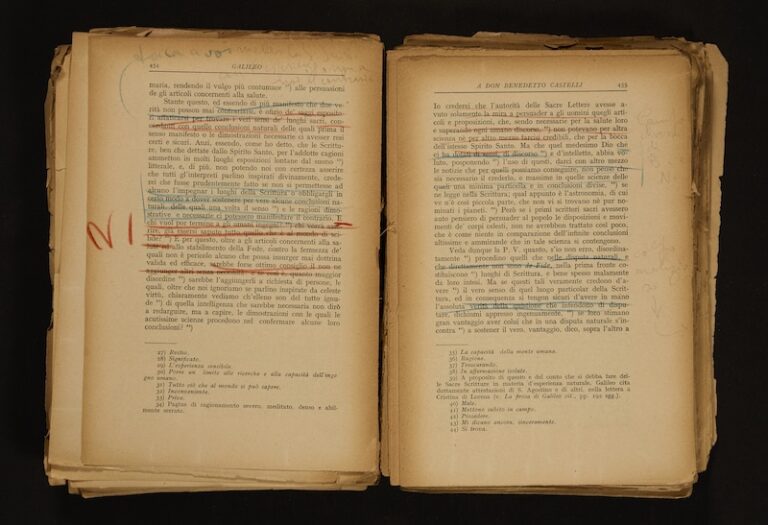
Dialogues with Pavese: Eleonora Gatto
For our themed column on Pavese’s contemporary critique, Iuri Moscardi interviewed Eleonora Gatto about her research on Cesare Pavese’s marginalia.

Dialogues with Pavese: Julianne VanWagenen
For our themed column on Pavese’s contemporary critique, Iuri Moscardi interviewed scholar Julianne VanWagenen about her studies on the Spoon River Anthology.
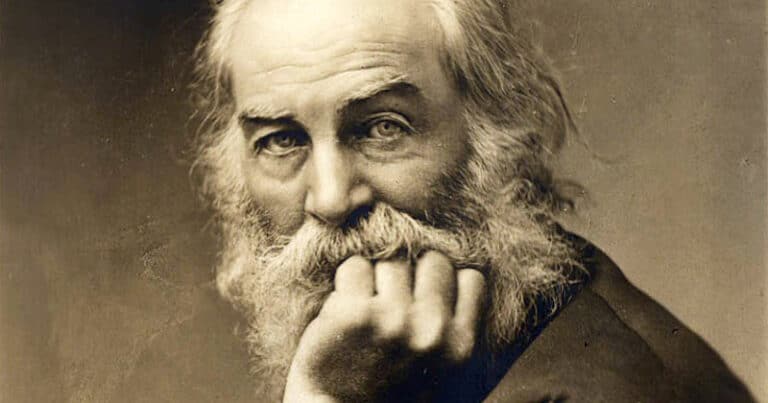
Dialogues with Pavese: Lawrence Smith
For our themed column on Pavese’s contemporary critique, Iuri Moscardi interviewed once again Lawrence Smith, this time about his English translation of Cesare Pavese’s degree thesis.