For our themed column on Pavese’s contemporary critique, Iuri Moscardi interviewed Michele Sisto about his studies on translation.
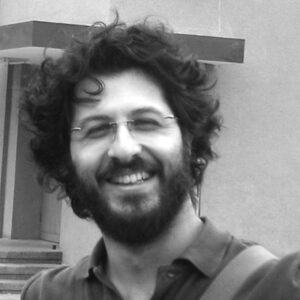
Michele Sisto is a professor of German Literature at the University of Chieti-Pescara. With an education in Comparative Literature, his research interests include Theory, History, and Sociology of Literature and of Translations, as well as Masculinity, Internet, and Postcolonial Studies. He is the director of the research project LTit – letteratura tradotta in Italia, of the collection Letteratura tradotta in Italia (Quodlibet publisher), and the journal ri.tra | rivista di traduzione. He is also an editor for the journal allegoria, a member of CeST (Centro Studi sulla Traduzione) and of the History & Translation Network. Among his publications: La letteratura tedesca in Italia. Un’introduzione 1900-1920 (2018), Traiettorie. Studi sulla letteratura tradotta in Italia (2019), World Literature(s). Traduzioni e storia letteraria nazionale (2024), Weltliteratur made in Italy. Il canone delle traduzioni nella storia letteraria italiana (2024) e Lo spazio dei possibili. Studi sul campo letterario italiano (2024).
For you, quite as well as for Pavese, literature cannot be considered without its translations. How did you approach such a relevant, although often forgotten, aspect of literature?
You are right: I have been focusing on translation for twenty years. My interest started with my doctorate dissertation, which I defended at the University of Turin, and then continued at the Istituto Italo-Germanico in Trento with a research project about the literary relationship between Italy and Germany in the 1990s and above all with the project Storia e mappe digitali della letteratura tedesca in Italia nel Novecento: editoria, campo letterario, interferenze, based at Istituto Italiano di Studi Germanici in Rome. That project later extended to other literatures and involved other scholars, resulting in the web portal LTit – Letteratura tradotta in Italia, in an editorial collection with the same name and, more recently, in the journal ri.tra | rivista di traduzione. The most emblematic essays of my latest research are World literature(s). Letteratura e storia letteraria nazionale (2024) and Weltliteratur made in Italy. Il canone delle traduzioni nella storia letteraria italiana (2024), which take stock of the work done so far and outline a proposal for the inclusion of translations into Italian literary history; they will be the first two chapters of a book that I am now writing. Finally, the complicity of most European countries – which is even worse when we consider their forgotten colonial and genocidal past – in the Palestinian genocide had a deep impact on my research. Such a disappointment made me try to exit what I called the “European bubble”, which hides from our view the majority of the cultures of the world. For this reason, I am focusing on translations from extra European literatures – from Arabic to Chinese – and I am writing a book – deeply influenced by Edward Said’s Culture and Imperialism – titled The Whites are Coming. German Literature and European Imperialism.
You studied literature translated into Italian as an integral part of the national literary history, and this is an unusual perspective: how can a foreign literature be considered part of our literary history?
This is something that can be immediately perceived only if we remove our academic glasses, which filter reality dividing it into separate disciplines. Translations are made by Italian authors: they are often just translators, but – more often than expected – they are also authors of works of their own, and, not seldom, well-known writers. Pavese was no exception. Prezzolini, Slataper, Borgese, Montale, Quasimodo, Gadda, Levi, Fenoglio, Pasolini, Fortini, Sereni – considering the 20th century only – translated a lot of books, too. Even today, some of the most important Italian writers – from Aldo Busi to Paola Capriolo and Paolo Nori – are also great translators. So, if we remove the academic glasses (or if we adopt different academic glasses), translation will appear as one of the many possible ways to write literature in one’s own country. Emilio Mattioli, one of the most important Italian theorists of translation, used to consider translation as a literary genre: there are novels, lyrics, travel books and translations. According to this perspective, we can reconsider the entire national literary history by reconstructing the translation projects that turned, for instance, Dante’s Il fiore (a translation of Roman de la rose), Vincenzo Monti’s Iliade, Quasimodo’s Lirici greci or Pavese’s Antologia di Spoon River into models for writing, poetry, novels, etc. I mentioned only famous authors who have already been studied (but not from this point of view), but the real challenge is to detect the countless cases where translators are totally unknown, like that Lorenzo Franciosini who first translated, in the 17th century, Cervantes’ Don Quixote into Italian as Don Chisciotte (and no other translator dared to keep the Spanish original title ever since), or that Michiel Salom who first translated, at the end of the 18th century, Goethe’s Werther from German, or again, to make one last example, Edoarda Masi – more famous, but for other reasons – who in the 1960s translated the extraordinary novel Dream of the Red Chamber from Chinese. Some of these translations are real masterpieces of Italian literature: they worked perfectly when published, and often are still worth reading today, despite the unavoidable patina of time, and definitely worth being integrated into the narration of the history of the Italian literature.
In recent years, the concept of World Literature has encouraged analyses in the fields of national and comparative literatures: how do national literatures – which we tend to consider as expressions of specific cultures – dialogue among themselves? How can they find global, common models?
I would say that the idea of global, common models, upon which comparative literature as a discipline relied in the 19th and 20th centuries, must be questioned. The very idea of a single literary canon, as theorized by Harold Bloom, is the typical product of a false Western universalism – the same we have got used to with globalization – based upon the premise that the entire world should follow the European path towards the so-called modernization, and removing the fact that this kind of modernization is built on capitalistic, colonial, patriarchal, and environmental exploitation. Today, if we look at the evolution of economics and politics in Europe and the USA, we should wonder if this European way of modernization is not a dead-end, or at least an approach whose premises must be seriously reconsidered, as philosophers from the South of the world like Enrique Dussel have begun to do. In this perspective, even the Western canon needs to be completely reconsidered, starting from the idea that there must be one, moreover limited to the Western bubble. Assembling a series of European models, from Divine Comedy to Faust and so on, might make sense only if we consider ourselves as a closed system. As much as authors like Shakespeare or Kafka actually had some relevance in the Arabic world, or in India and China, it is at the same time true that those and other cultures developed from other models, either local or imported. For me, this is the point: every (literary) culture imports the models it needs and then, through translations (but not only), it re-elaborates them according to specific purposes. Sometimes, these models may come from the center of the empire – which for us has been represented, for centuries, by France, then Great Britain, and finally the USA, from which we currently import almost 80% of the translated literature. Some other times, these models may come from other places, neither related to the empire in a relationship of center vs periphery nor to the center of the World Republic of Letters, as Pascale Casanova defined it in her fundamental study bearing the same title. I am thinking of One Thousand and One Nights, Shakuntala, Cao Xueqin, Kafka, Dostoevskij, Ngugi wa Thiong’o, or Mahmud Darwish. Or, again, of Joyce Lussu, a crucial translator in post-WW2 Italy whose books I am devouring, who focused mainly on poets from countries fighting for their decolonization. In this perspective, I suggest not to think in terms of World Literature, inevitably Eurocentric, but rather of many World Literatures, all locally built throughout the centuries and responding to ever-changing, but always locally defined, interests. This implies a concept of world literature which is plural and multipolar, that breaks the rigid outline of just one literature with only one radiating center, situated in Paris, London, or New York.
Cesare Pavese translated American authors because he found, in the literature of the US, a model of writing and style: according to your experience, which is the value of Pavese’s translations?
I can rely just on one unusual translation, the translation of Masters’ Spoon River Anthology notoriously made by Fernanda Pivano under the guidance of Pavese, as well as on the few poems from the Anthology that he translated in 1930. I have also read many of his other translations, from Moby Dick to Moll Flanders, but I have not deeply analyzed them. I think that we can define them as the translations made by a great writer, who had his own specific literary project: renewing the Italian poetry and novel by introducing an additional focus on democracy, on the life of working classes and on marginality (the marginality of the province, when compared to the dominating centers of the time, Florence and Rome). From this point of view his translations – included the translations that he commissioned, like Whitman’s Leaves of Grass given to Enzo Giachino or Iliad to Rosa Calzecchi Onesti – are an integral part of his literary work: they are part of a wider project of renewal of the Italian literature, which happened along with other vital projects and poetics of the time, like crocianesimo or Hermeticism. I think that Pavese’s translations, as well as all other literary translations, must be studied without searching for a more or less elusive faithfulness or accuracy, but considering them within these projects of renewal of genres, language and, consequently, worldview. A fundamental aspect, on which we rarely focus, is not how we translate, but what is translated. The choice of translating Sherwood Anderson’s Dark Laughter or Masters’s Spoon River Anthology reveals a lot about the direction that a writer dealing with the experiments of Lavorare stanca wanted to pursue. Of course, how we translate is also fundamental, and we can see it from Spoon River Anthology: through cuts, alterations, interpreting essays, and the collocation of the book in a specific collection of Einaudi, Pavese made this book something radically different from the so-called original one, which is today considered a minor work of the US literature, whereas in Italy it remains one of the most read and translated collections of poetry ever published. By analyzing Moby Dick or Autobiografia di Alice Toklas I am sure that we will discover other great translations, all of them expressions of the different steps of Pavese’s literary project, which has changed throughout the years and according to his different positions within the literary field.
Talking again of Spoon River, you studied this translation in the article L’Antologia di Spoon River di Edgar Lee Masters e Cesare Pavese. Genesi e posizionamento di una traduzione nel campo letterario italiano degli anni ’40. More specifically, how relevant was Pavese in this process?
I focused on the issue of the identity/alterity between translations and originals when, during my research on the translations from German, I discovered that some of these translations radically changed the meaning of the original works. For instance, Goethe’s Werther, which is a deeply anti-sentimental novel, has been translated and read for 150 years as a sentimental novel (in the most common editions the title was not The Sorrow of Young Werther but Werther: Sentimental Work written by Doctor Goethe or Werther: Sentimental Letters). This is not a problem of the 19th-century translators: many German writers, whose writing style is characterized by irony and parody (Kraus, Kafka, Musil, or Bernhard), are still deprived – maybe because of a very Italian prejudice about the seriousness of the German language – of their irony, and thus completely transformed. But these are exceptional cases. The point is that, when translating a work, it is inevitable – to use an expression by Theo Hermans, who was among the founders of the Translation Studies – to manipulate it. In other words, it is impossible not to make it become something else. Starting from this awareness, I have begun to develop a general thinking, which I would now express back to front. No reader of Kafka’s Metamorfosi would affirm, in front of a reader of Kafka’s Verwandlung, that they read the same work, which is to say the work in itself. The reader would honestly admit to have read one translation (in Italian there are at least twenty-five of them, of course all very different), so another thing, an attempt to remake Die Verwandlung in another language, another time, another context and, more importantly, an attempt made by another person, who is not the author but another author and who – compared to the author of the original text – has another worldview, uses the language in a different way, and relies on a different poetic (Mattioli effectively defined translation as the encounter of poetics). So, it is very difficult to affirm that a translation is the same as the original. But if it is not the same thing, it means that the translation is another thing: its relationship with the original is not one of identity but one of alterity. Of course it is a conditioned alterity, addressing conditions that change from time to time and from context to context; the only constant element is perhaps that the relationship between a translation and the original is that of an alterity that simulates an identity. This because, at least in Europe for the last two centuries, we have been quite attached to the illusion of a direct access to the original, and therefore tended to ignore that there is mediation, a remake in-between. Mediation should not be considered a reduction that takes something away from the original text: on the contrary, it could do the opposite. A translation – or, better, a translation project – may work better than the original, as is the case with Spoon River Anthology. This is something that happens much more frequently than we could think. Pavese’s is a peculiar case that, precisely for the extreme awareness and clarity of his intervention, allows to highlight the general issue of the alterity of translations.
“Un Pavese ci vuole”: this misquotation from a very famous passage from The Moon and The Bonfires was the title of a series of video-interviews I conducted with the director of Fondazione Pavese, Pierluigi Vaccaneo. Seventy-five years after Pavese’s suicide, do we still need him? And, whether yes or no, why?
Mine, as I said, is just a partial perspective, based upon the things I reread when drafting my essay. I can only affirm that to me Lavorare stanca seems a very vital book, still: the earliest poems, especially the ones from 1930-32, maintained a radical approach towards some ambivalences of European modernity and an aesthetic perfection unmatched both in the following production of Pavese and in most of the late 20th–century poetry. What impressed me more, during this rereading, was their experimental spirit, which can be found in Ciau Masino and, more evidently, in Paesi tuoi. Well, I believe that such an experimental spirit is much needed today, also in the publishing sector. The way in which Pavese connected literary experimentation and editorial strategy is rare, and it surely constituted one of the most important achievements of 20th–century Italian literary culture. I am referring here to the mature Pavese, the founder of editorial collections like Einaudi’s Millenni and Supercoralli, with all the countless projects that he followed with rare curiosity and openness, from Liriche cinesi to the first translation from the Arabic of One Thousand and One Nights. I believe that we still have a lot to learn from this activity of his not only as a mediator, but as an organizer of culture, endowed with a wide and dynamic conception of the Italian literature in its historical progress. Some of his translations, either made by himself (Joyce’s Dedalus or Moby Dick) or commissioned by him, like Iliad or Spoon River, are even more important than his original works. If we consider them as an integral part of his work, this does not reduce, but on the contrary, strongly increases his relevance as a writer.
An interview by Iuri Moscardi

Dialogues with Pavese: Pietro Montorfani
For our column on Pavese’s contemporary critique, Iuri Moscardi interviewed researcher Pietro Montorfani about Antonio Porta’s Italian translation of “Anthology of Spoon River”.

Dialogues with Pavese: Nadeesha Uyangoda
Read the interview about her first novel “Acqua sporca”, rich in references to Cesare Pavese.

Dialogues with Pavese: Mark Pietralunga
An interview with Mark Pietralunga, Chair of the Department of Modern Languages and Linguistics at Florida State University, Tallahassee (USA).