
For our themed column on contemporary Pavese’s critique, Iuri Moscardi interviewed Antonio Sichera, principal investigator of the hyper-edition project PAVES-e.
 Antonio Sichera is full professor of Contemporary Italian Literature and Foundations of Hermeneutics at the University of Catania. Along with Luigi Pirandello, Pier Paolo Pasolini, and many other Italian and European authors, he has studied Pavese’s poetry (Concordanza delle poesie di Cesare Pavese, 1997), defining Lavorare stanca as the center of Pavese’s oeuvre. He has also investigated all of Pavese’s narrative works, comparing them to Joyce in their dealing with the semantic field of imprisonment (Pavese nei dintorni di Joyce: le due stagioni del Carcere, 2000) and with the Bible, the Ancient Greeks, and American and European literatures (Pavese. Libri sacri, misteri, riscritture, 2015). With Professor Antonio Di Silvestro and a team of scholars (Liborio Pietro Barbarino, Christian D’Agata, Miryam Grasso, Maria Concetta Trovato, Eliana Vitale) in 2021 he published the monumental Cesare Pavese’s Opera poetica (Mondadori), on which our former interview is focused. Today, he will introduce PAVES-e, a new digital project about the works of Cesare Pavese.
I guess that the work behind your 1997 study was very different – in terms of the tools employed – from the one that led to Opera poetica in 2021. How did your work methodology evolve? How much did Digital Humanities contribute to it?
Since 1997, the world has changed. Since the 1980s we have worked as pioneers in computational lexicography, on green phosphor screens and with computing units of almost gigantic proportions. That was the method of a man ahead of his time, Giuseppe Savoca. Our book, Concordanza delle poesie di Pavese, was one of the results of that computational effort. Back in the days, the processes obviously took much longer. Texts had to be typed in; verses were distinguished by means of long codes; lemmatization required the constant intervention of the lexicographer, even though we had at our disposal a machine dictionary that was very advanced for the time; the output was in print: volumes as big as telephone books in which all the lexicographic entries and all the word occurrences were recorded, along with the indication of grammatical categories and frequencies – both absolute and relative – for each lemma. Today, technology has evolved enormously, and above all the introduction of digital technology has deeply changed the way we work. For our Mondadori edition of Pavese’s Opere – which includes the novels, Dialogues with Leucò, and the Opera poetica – we had at our disposal a series of powerful and innovative research tools, not to mention the opportunities offered by AI. And yet, the care of the philologist as well as critical reflection remain (fortunately) irreplaceable.
The most recent result of your work is PAVES-e, the hyper-edition dedicated to Pavese’s oeuvre: as your website says, it is an integrated digital space in which texts and documents weave a virtual, fruitful dialogue. Where did the project originate from and how did it develop? Who are its promoters and financial donors? Like for your Opera poetica, it looks like a teamwork, which requires remarkable coordination and cooperation skills.
PAVES-e is a major Pavesian portal, the result of thirty years of study. It is a digital space created thanks to the funding from a PRIN 2022 grant of which I was the Principal Investigator. The University of Catania presented the project together with the University of Turin (University Researcher Laura Nay) and the CNR (University Researcher Daria Spampinato). There is a strong theoretical framework behind PAVES-e, which has strengthened over time drawing on the experience of Pirandello nazionale, the digital edition of Pirandello’s Opera Omnia promoted by the National Commission of the Italian Ministry of Culture (of which I am a member) with the support of Mondadori (an edition directed by myself and Antonio Di Silvestro). The basic concept is that of the hyper-edition: PAVES-e, like Pirandello or Verismo digitale (a digital project on the major Verismo writers funded through PNRR resources), is neither a simple digital critical edition of a text nor a form of hypertext, but rather an integrated digital space towards which all textual knowledge (from archive studies to ecdotics, from philology to linguistics and lexicography, from criticism to the teaching of literature to the various forms of transcoding) around a given work converges in order to return all the possible ‘images’ of a text to the reader, in a synchronic manner. This lays the foundations for a new hermeneutics of great books.
Your website defines as classics the authors who extend their breath precisely as one moves away from their historical time, from the generation who have known them alive or encountered them in the immediacy of the last season. Pavese has become a classic “year by year, thanks to the consensus and love of his readers, especially the youngest ones”. In what way can PAVES-e contribute to spreading the relevance and readership of Pavese? What readers would you like to reach?
PAVES-e can make a great contribution in this direction. First of all, because since the time of Pirandello, a project launched ten years ago, we have always focused above all on passionate readers, students, teachers. Our underlying conviction is that science is not a fortress for a chosen few, but rather a navigable space, to hand over to those who are not specialists, by ‘translating’ – and by having users themselves ‘translate’ – the most refined scholarly findings into high-level popular dissemination. The didactic and, I would say, democratic orientation of these spaces does not imagine any second-rate users and spaces; on the contrary, it holds that the encounter with a broader audience urges literary sciences towards focused approaches and deeply integrated perspectives. This is even more appropriate for a writer like Pavese, who is more and more favored by many young people and who is constantly quoted and remembered on the web and social media. Pavese ‘speak’ beyond any question of merit or personal taste because in his books there is something profoundly human and intimately contemporary, despite the fact that his countryside and his city no longer exist, and despite the fact that his world is very far from our own. For this reason, we have tried to offer a new Pavese, or rather new images of Pavese, through the edition of his works and through PAVES-e. Like a place, or places, in which one can find a reflection of oneself, hear a voice again, feel addressed and interpreted.
The website is organized in different multimedia sections: Pavese In Immagini, Pavese In Testo, Pavese In Parole, OntoPavese, AnnotaPavese, BiblioPavese. I found interesting the distinction you made between text and words, as well as the Annota section, which allows users to annotate in an innovative way. How did you decide these sections? What are their functions?
I think it is worth explaining the architecture of PAVES-e. The portal has several entry points and several levels. It allows multiple modes of inquiry: by section, by topic of interest, by individual work, by type of expected results.
OntoPavese is the semantic organization of knowledge within the Pavese domain. The ontology is the ideal computational tool for managing semantic heterogeneity, provided that the data populating it has been adequately catalogued, organized in archives, and tagged with metadata. We could say that it represents the deep structure of this hyper-edition.
Pavese In Immagini hosts the fully digitized archive of Pavese’s manuscripts to give everyone, from the young researcher to the passionate student, the opportunity to engage with the living trace of the author.
Pavese In Testo presents the Digital Scholarly Editions (DSE) of the works (the diplomatic edition of the manuscript of Lavorare stanca is among the most advanced currently available, both nationally and internationally, in the digital editing of manuscripts), of the journal, and of the correspondence (deeply expanded and renewed with respect to the Calvino-Mondo edition). The editions are prepared through encoding of proper names, place names, direct speech, and authorial corrections, and feature a detailed TEI Header in which the essential metadata are made explicit (for instance, information on the date of composition of individual poems or novels, the stages of revision, the responsibility for each aspect of the encoding, bibliographical information, etc.). The digital representation of all these elements has been carried out using the XML-TEI encoding system, while the display is rendered in TEI Publisher, modified and adapted by our software developers to meet the specific needs of Pavese’s texts.
Pavese In Parole hosts Pavese’s vocabulary, namely the concordances of the works, freely searchable by word forms and lemmas, with full grammatical and statistical information and freely expandable contexts. Compared to non-digital concordances, the natively digital conception of the project and current visualization techniques represent a significant innovation, improving usability, increasing the accessibility of resources, and expanding the possibilities for querying and retrieving results. Technological innovation consists in the connection between lemmatization and a semantic graph, enabling searches not only on lemmas, forms, and occurrences, but also complex queries that cross-reference lexicographical data with multiple semantic fields and the metadata relating to the various works.
AnnotaPavese is a highly innovative section, still in an experimental phase. Through a simple interface, each user will access their own dedicated area and will be able to create a document, add notes and comments to the texts in the databases, test themselves in transcribing manuscripts, and save and share the results of queries and concordances generated. For example, it could be used in the classroom by a teacher to have students comment on a chapter of La luna e i falò, both from a narratological and a linguistic perspective, bringing out students’ interpretations; at the same time, it could be used by a young scholar wishing to analyze the text from their own critical standpoint and receive an XML-TEI encoded output, without needing any prior knowledge of that markup. The didactic dimension is not limited to the possible annotation of Pavese’s texts by students but actively engages secondary school and university students in a crowdsourcing perspective and valorizes creative competences by inviting their own productions in a dedicated section of the portal. In addition, PAVES-e envisages the creation of podcast episodes and comics (produced also by students, and already available on the portal), in a storytelling perspective, on one hand to draw students and readers into Pavese’s imaginative world, and on the other to offer a model for audience-generated content. There are also teaching pathways that present the lexicographical, philological, and critical resources in a creative way, through word clouds, timelines, PowerPoint presentations, and so on.
BiblioPavese has developed an annotated digital bibliographic database of secondary literature on Pavese, which can be continuously expanded. It allows complex, composite searches by author, year, keywords, work, title, and abstract.
In short, many entry points conceived as possibilities of contact with the work at many levels and by different kinds of readers to allow Pavese’s writing to engage with its scholars and its audiences, to give it the breath that great texts deserve and acquire through the contact with those who listen to them and are still nourished by them. Literature is not primarily a linguistic event, but rather the manifestation of a vital world; the adequate, complete expression of a Poesie (as Heidegger called it) in which reality participates in its totality.
As for the texts by Pavese, so far you have uploaded Lavorare stanca, his Lettere, some of his literary essays, Dialogues with Leucò, The Moon and the Bonfires and – partially – the journal, Il mestiere di vivere. Which criteria did you follow for this textual selection? Which texts will you add in the future?
A project like this aims at the entirety of Pavese’s oeuvre, but in this first phase, we wanted to document the potential of the approach across the various genres of his work: poetry, novels, dialogues, correspondence, journal, essays. The future task will be to gradually add, genre by genre, the works still missing. It is important to bear in mind that the ultimate purpose of PAVES-e is the creation of a kind of grand commentary on the opera omnia; in other words, to lay the foundations for an exegesis of Pavese through Pavese himself. Thanks to the ontology, all the texts are indeed related one another. One can find out which letters or journal entries Pavese was writing while composing a given work; one can call up a word and trace its diachronic evolution together with its successive meanings; one can intercept the intertextual dimension through a meticulous work on the sources. In this sense, the commentary in progress on Dialogues with Leucò is the most advanced outcome – the most expressive achievement – of the Pavesian ‘commentary’ project, by virtue of its internal and external intertextual dimension.
“Un Pavese ci vuole”: this misquotation from a very famous passage from The Moon and The Bonfires was the title of a series of video-interviews I conducted with the director of Fondazione Pavese, Pierluigi Vaccaneo. Seventy-two years after Pavese’s suicide, do we still need him? And, whether yes or no, why?
This is both a wonderful and a beautiful question. Our need for a book, for the word of a great writer, is never determined in an abstract way. Why does Pavese endure, having given the impression – just a few decades ago – of having reached the end of his literary fortunes? I believe that Pavese is an interpreter of the existential fragility so keenly felt today, but that he is also the standard-bearer of a resistance, beyond the mysterious outcomes of his own life. In the last dialogue of Dialoghi con Leucò, entitled Gli dèi, one of the two interlocutors – two modern mythologists grappling with the truth and the contemporaneity of myth – says to the other: «I believe in that which every person has hoped for and endured» [translation by Minna Zillman Proctor, 2025]. It seems to me that here, in essence, lies the deep strength of Pavese: a powerful faith in humanity grasped in its ultimate, radical dimension. Men hope every day because hope is written in the body and is the energy that drives us forward. Men suffer, because life is often difficult, unjust, perhaps absurd. This mystery of the human – which today we might extend to the whole of creation – cannot be resolved with a formula, cannot be confronted with the resources of pure reason alone. What is needed is involvement, risk, the folly of a faith that is at once realistic and impossible, daily and yet exposed to defeat. Pavese bore witness to this through his writing, and perhaps it is for this reason that he still moves us and calls out to us.
An interview by Iuri Moscardi

Dialogues with Pavese: Nicola Cavalli
Digital technologies for great classics: for our column “Dialogues with Pavese” we interviewed Nicola Cavalli from Ledizioni publishing house.

Dialogues with Pavese: Tim Parks
The good translator reconstructs the original text: read our interview with Tim Parks, author of a new translation of “The Moon And The Bonfires”.
Dialogues with Pavese: Eleonora Gatto
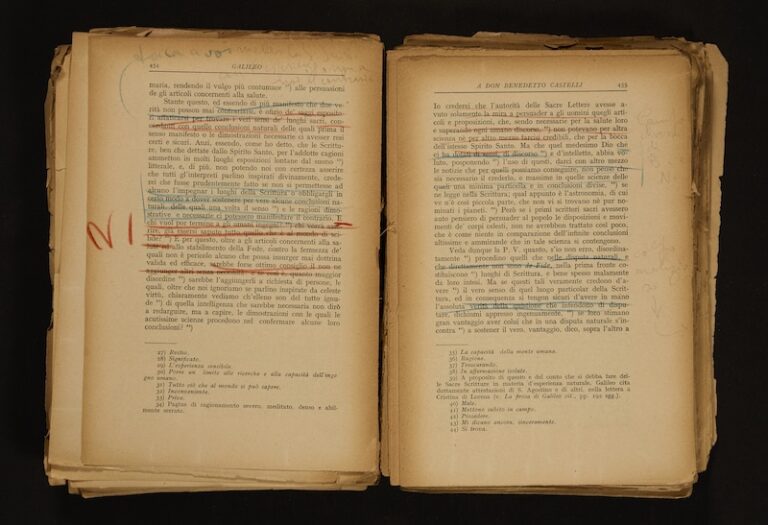
For our themed column on Pavese’s contemporary critique, Iuri Moscardi interviewed Eleonora Gatto about her research on Cesare Pavese’s marginalia.